
20 pilot schools move forward in measuring food waste
12 May 2026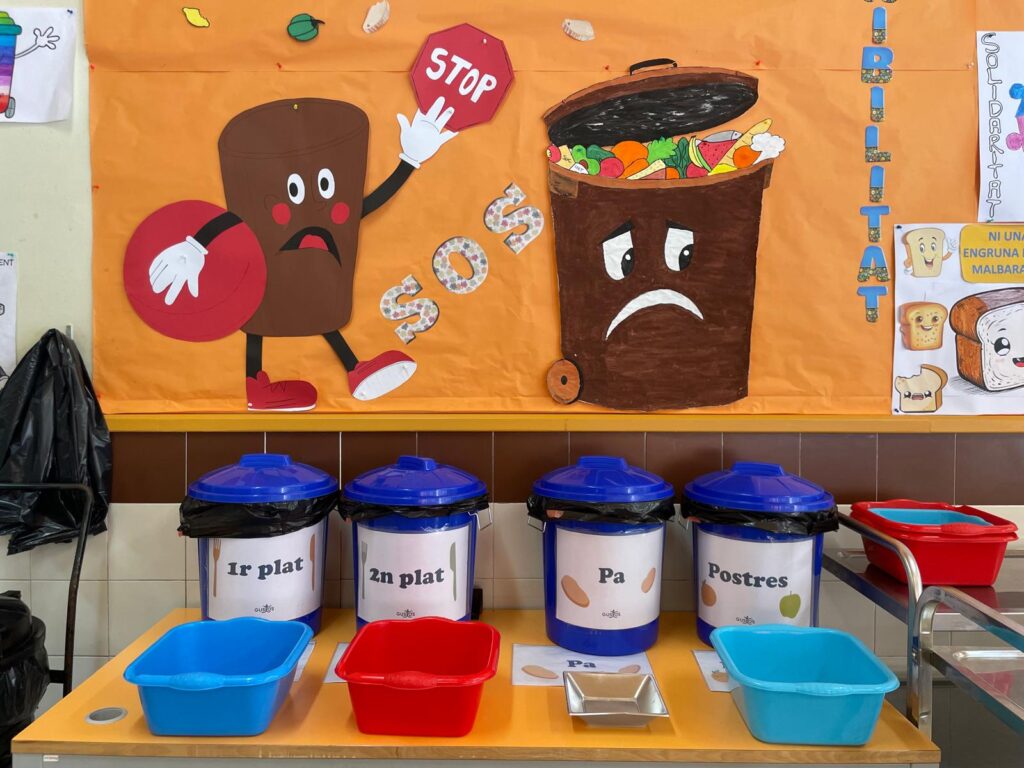
The initial phase reveals an average food waste of 14% and lays the groundwork for future educational and gastronomic interventions.
Within the framework of the European GUSTOS project, the 20 pilot schools that will take part in the planned interventions to reduce food waste in school canteens have now been selected—ten in Catalonia and ten in the Basque Country.
The schools have completed the initial food waste quantification phase, a key step in establishing baseline data prior to the implementation of the educational and gastronomic interventions promoted by the project.
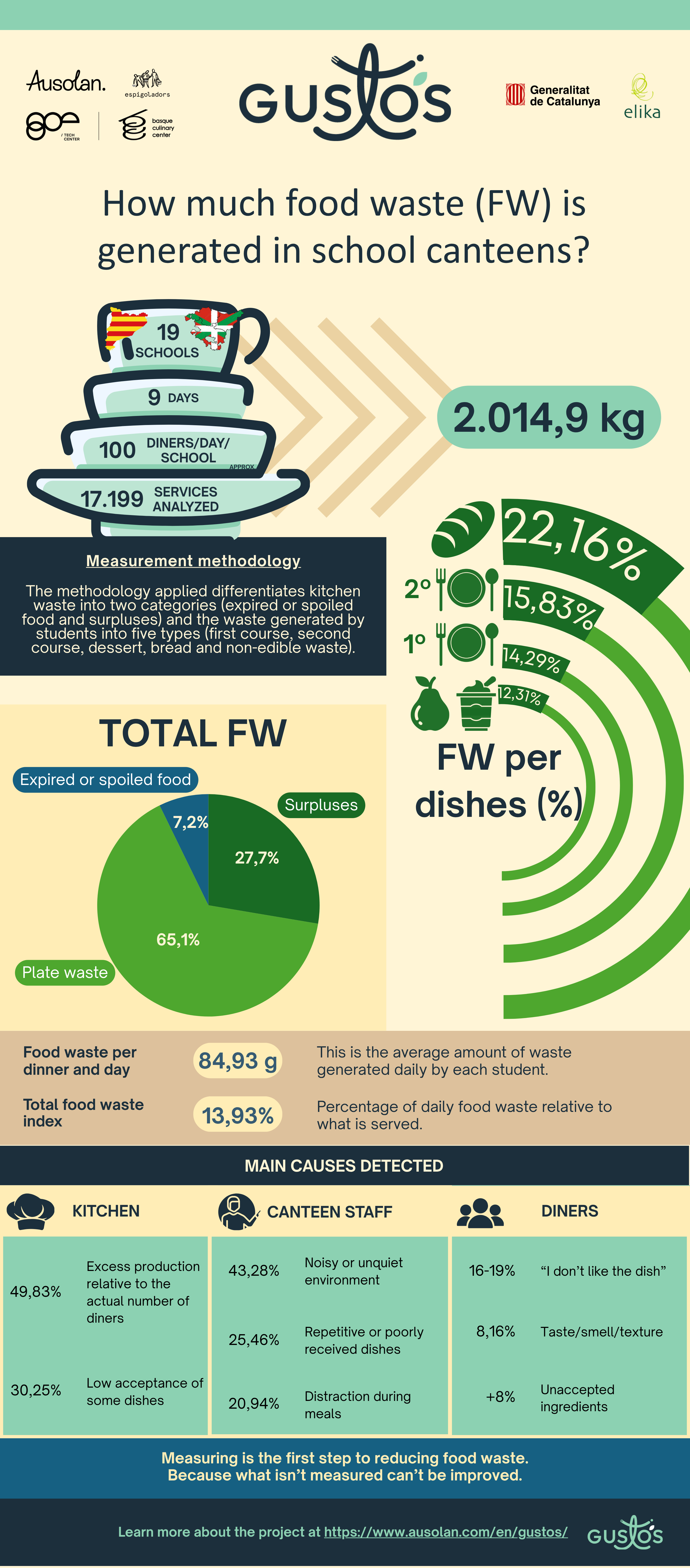
Over a two-week period, each school manually recorded the food served and the food wasted both in the kitchen and in the school dining room, with an average of around 100 pupils per day. The methodology distinguishes kitchen waste into two categories (expired or spoiled food and leftovers) and food waste generated by students into five types (first course, second course, dessert, bread, and inedible waste).
At the same time, the causes of food waste were also identified. Initial results point to an average waste of close to 14% per diner, with bread being the most frequently discarded food. In addition, approximately 40% of plate waste is related to individual preferences and sensory aspects of the meals.
This first baseline measurement will make it possible to establish the initial situation of each school and will serve to assess the real impact of the future educational and gastronomic interventions to be carried out.
The development of this methodology aims to ensure that the results of the GUSTOS project are useful not only for the participating schools, but also for other schools interested in implementing food waste prevention strategies in their school canteens.
We invite you to learn more about the GUSTOS project here: https://www.ausolan.com/gustos/